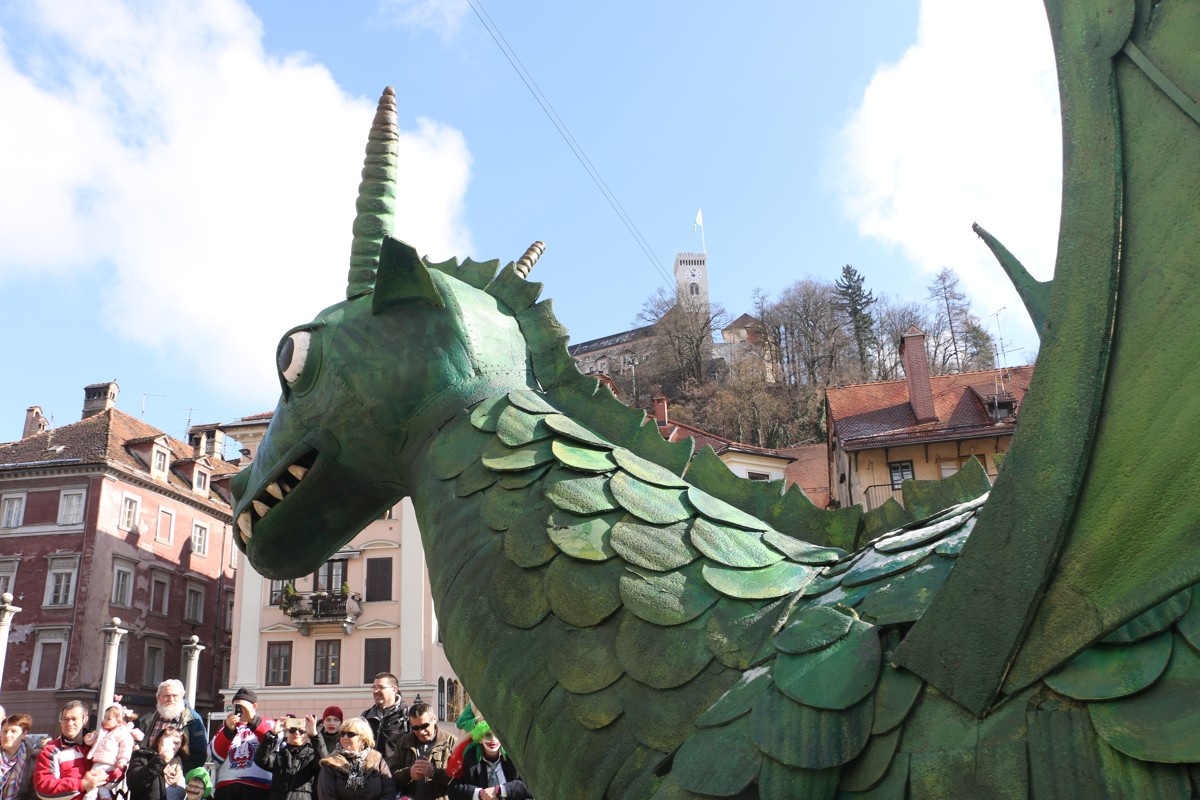
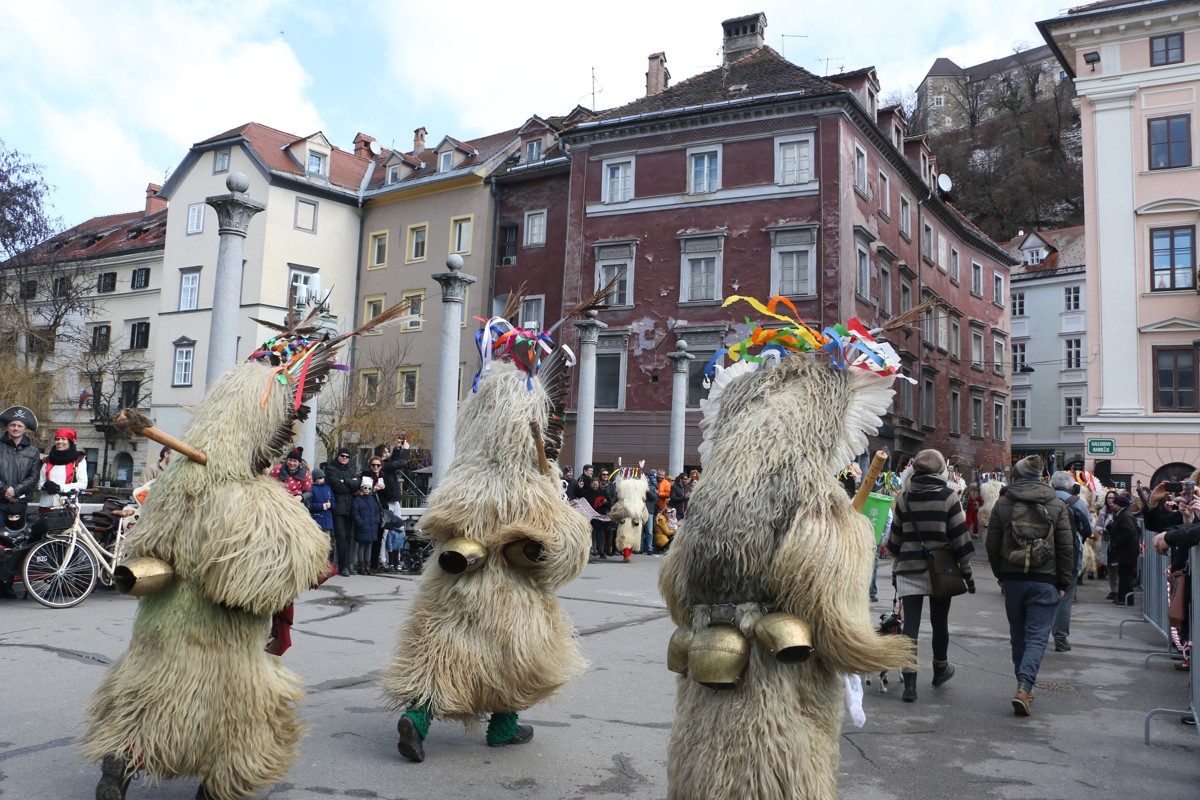
The parade, led by Ljubljana’s green dragon and joined by numerous kindergarten and primary school groups from Ljubljana, as well as ethnological groups, drummers, and a brass band, will begin at 11 AM at Novi trg. It will continue across the Cobbler’s Bridge, past the Town Hall on Mestni trg, over the Triple Bridge and Prešeren Square, before arriving at Congress Square.
There, visitors will be welcomed by a musical performance, followed by presentations by children’s carnival costumes, many of which will include short singing and dance routines prepared especially for this year. Group costumes will portray fairytale characters and have been created in line with reuse and sustainability principles.
The festive atmosphere will be further enlivened by ethnological groups from Slovenia and neighboring Croatia, along with a brass band, helping to chase winter away. Refreshments, including sweet treats and drinks, will be available, while the lively masked participants can enjoy the spacious dance area at Congress Square.
Shrovetide tradition
The tradition of celebrating Shrovetide with masks and carnival processions dates back to ancient pagan times. After 1300, Central Europe saw the merging of pagan and Christian traditions and masked celebrations began to be held over the days preceding the 40-day fasting period of Lent.
Slovenian carnival figures are very colourful and Slovenian Shrovetide traditions, reflecting the distinctive local features of the rural environments of the past, unique in many ways.
The country's best known carnival figures are 'kurent', originating from the town of Ptuj, 'laufar' from the village of Cerkno, and 'škoromat' from the village of Hrušica. In Ljubljana's surrounding area the best known carnival figures are 'mačkara' and 'petelin' from the village of Dobrepolje.