
Šmarna Gora from Zavrh (669 m)
© Peter Košenina
Šmarna Gora, Marked by Slovenia’s Highest Mountain, Triglav
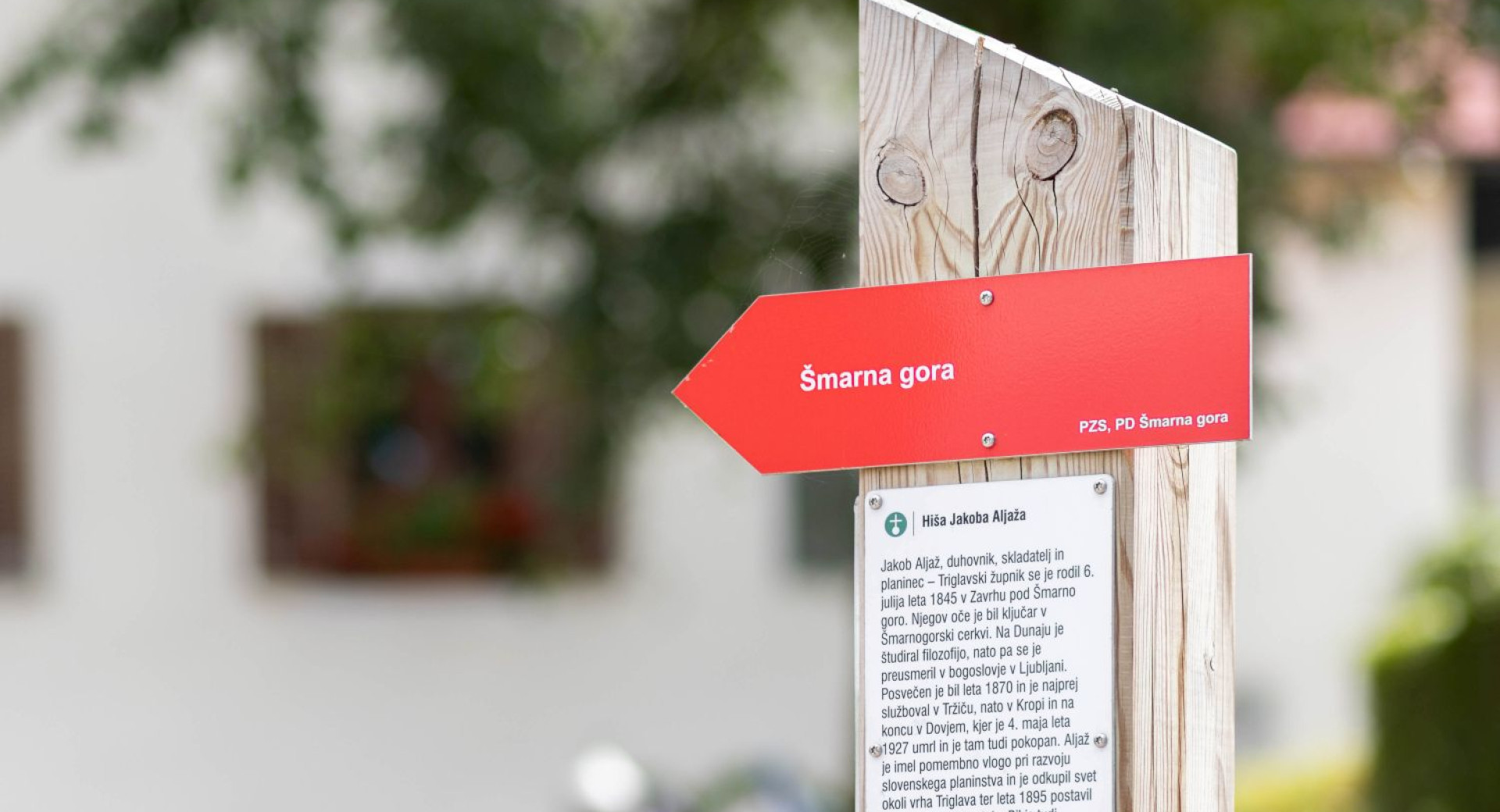
There are many trails leading to the top of Šmarna gora, with one route in particular exhibiting a true mountaineering character. From the village of Zavrh, located at the foot of this most popular hiking destination for people from Ljubljana, the path begins right outside the birthplace of Jakob Aljaž, a man closely tied to the Slovenian national symbol, Mount Triglav. In 1895, Aljaž purchased the summit of Triglav to secure it as Slovenian territory. He then erected a metal tower that remains a source of pride for the Slovenian nation and a symbol of Slovenian identity.

On a clear day one can see Triglav from the house where Jakob Aljaž was born in 1845, who then grew up to be a priest, composer, publicist, mountain enthusiast, and mountaineer. His statue is a local landmark in the town of Dovje and the Gorenjska region where he spent most of his life; there, his hand points towards the highest Slovenian peak crowning Triglav’s north face, one of the most impressive walls in the Alps.
On clear days you’ll have many opportunities to enjoy panoramic views of Triglav while en route to Šmarna gora’s summit. In front of the house were Aljaž was born, you can also see a miniature replica of his iconic tower, linking you directly to Slovenian mountaineering tradition.
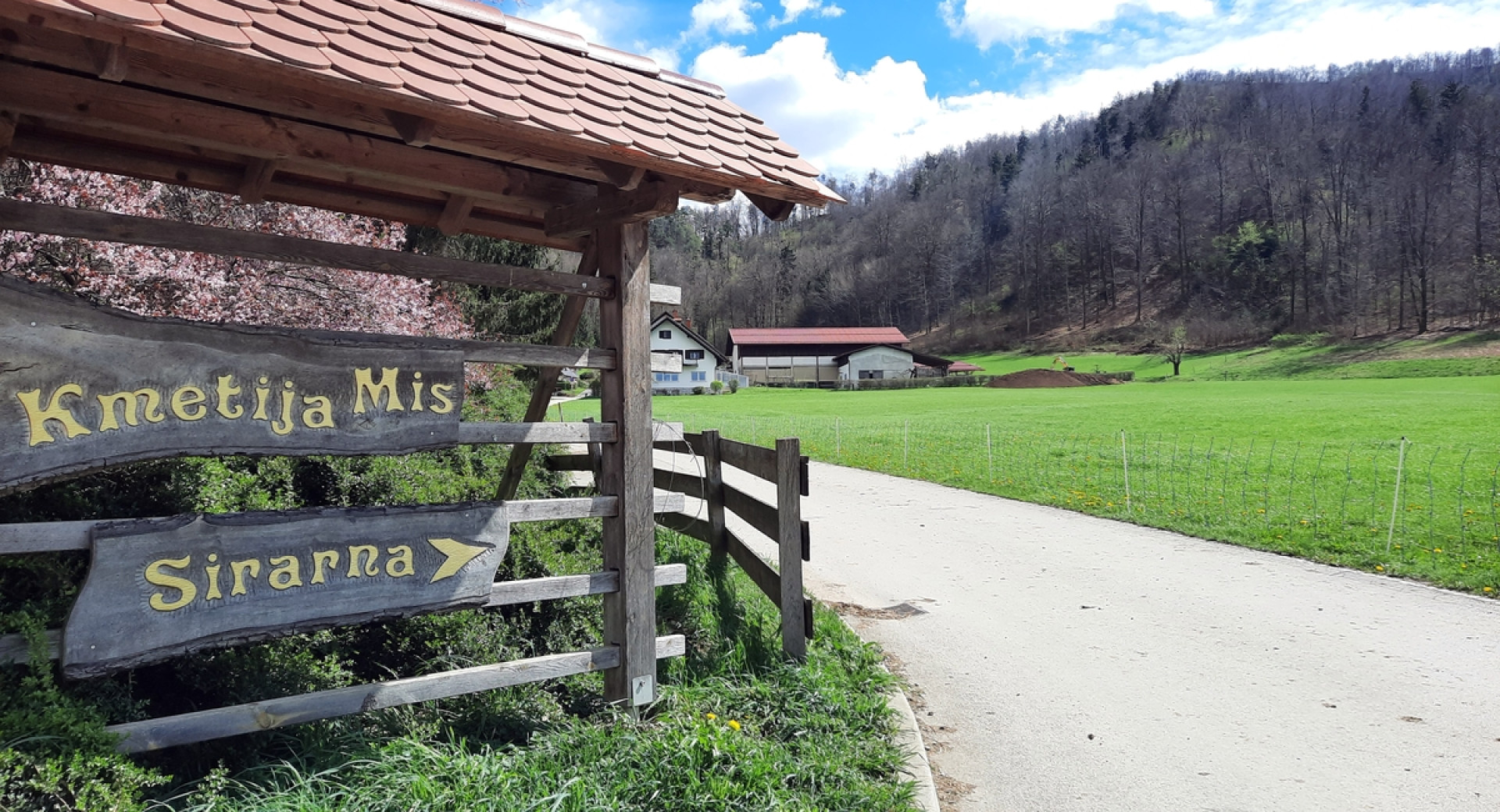
A red mountain trail signpost for Šmarna gora will guide you from the car park, where you’ll also find an information board displaying a map of the Šmarna gora trails. Heading towards Aljaž’s birthplace, you pass the Mis farm, where fresh cow’s milk and a variety of dairy products can be purchased: yoghurts, curd cheese, young cheese, butter and more. Immediately beyond Aljaž’s birthplace, the path leads into the forest. The trail steadily ascends along a comfortable path, occasionally interrupted by tree roots and rocks. After a while, it joins a wide gravel track (suitable for vehicles) arriving from Zavrh, and gradually climbs towards the summit passing the junction with the Pot čez Peske trail, a plague memorial from the 17th century, the Gorjančeva kmetija farmstead, a chapel dating from the same period, and a farm on the mountain saddle where it converges with trails coming from other villages at the foot of Šmarna gora. Continue to a fork offering two alternatives for the final ascent to the summit: either along the track or via a narrower, rockier, and scree-covered trail that passes the wayside chapel dedicated to the Holy Sabbath.
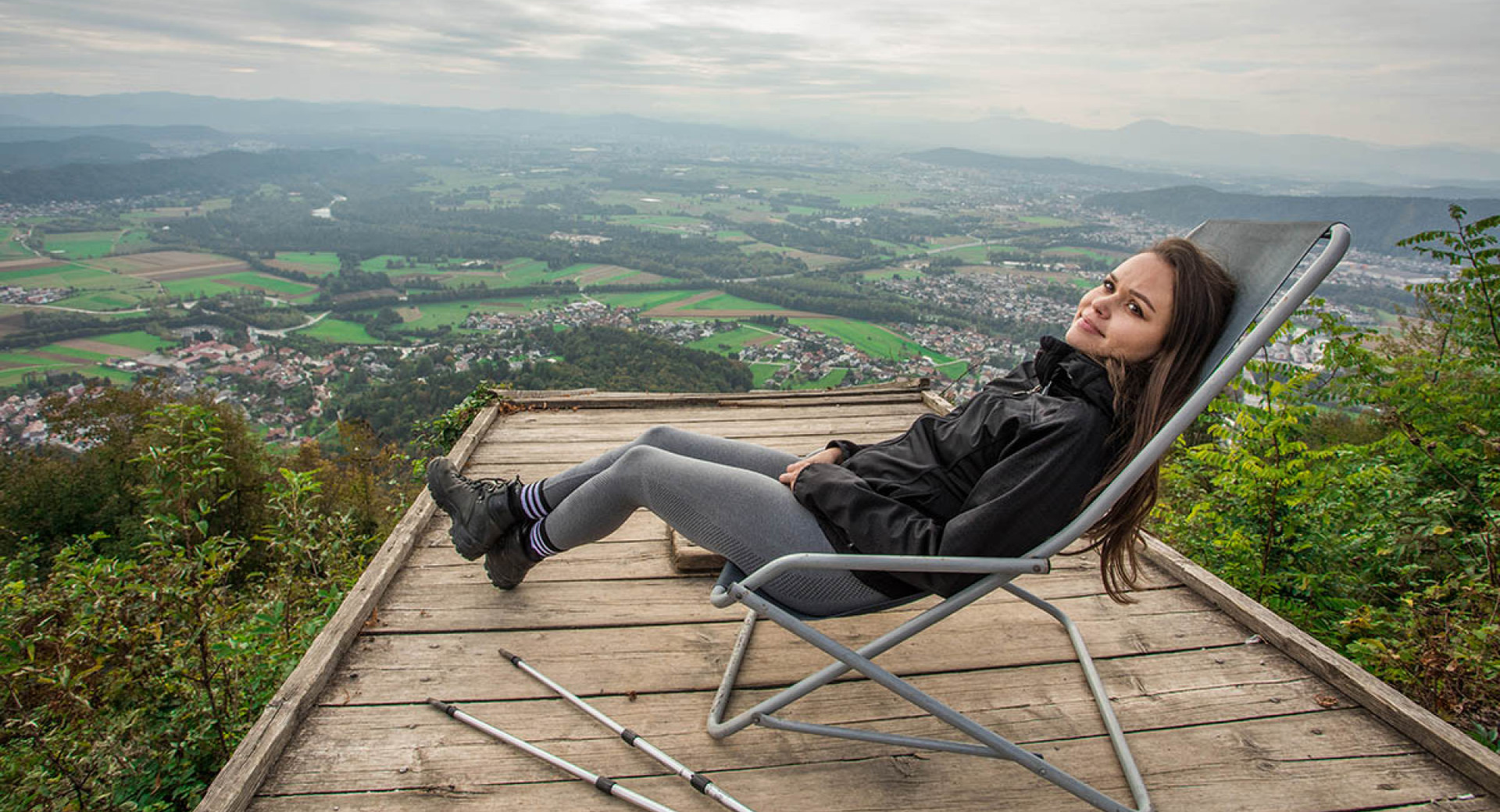
At the summit of Šmarna gora, take time on clear days to enjoy the breathtaking views of Ljubljana, the Sava River, surrounding hills and the distant Alps. Rest in the shelter of the pilgrimage church, where beneath its walls you’ll find numerous tables and benches to enjoy a well-earned break. Treat yourself to a snack or lunch at Gostilna Ledinek, where they proudly serve delicious, traditional Slovenian dishes.
Beneath the church, there’s a play area for children, an outdoor fitness area, and the bell of St Anthony, also known as the “wishing bell”.
Descent: via the ascent path.
Note: brief descriptions of the sights along the Šmarna gora trails are provided in Slovenian.
Tip: you can arrange a visit to the house and viewing of a film about Jakob Aljaž’s life by prior appointment at Javni zavod Sotočje Medvode
Photo highlights from the Šmarna Gora trail from Zavrh
© LT Archive
© Peter Košenina

© Peter Košenina
© LT Archive

© Matej Povše
© Matej Povše
Frequently Asked Questions
You can view the exact starting point location on Google maps.
You can reach the starting point by taking the LPP bus number 15.
You can access Šmarna Gora from Zavrh in all seasons. In winter, the trails can be icy in places, especially after snowfall, so crampons and hiking poles are recommended.
Gostilna Ledinek, Šmarna gora
Gostilna Mihovec, Zgornje Pirniče


