
MMM STORIES: On Bees and Honey
Si sapis, sis apis – if you are wise, be like a bee, says a Latin proverb that Slovenians follow almost unconsciously every day. However, it often seems that we focus only on one aspect of bee behaviour - diligence and docility, the main attributes of the indigenous Carniolan honey bee, which was classified as a separate subspecies in the zoological classification of honey bees as far back as 1879. After almost 150 years, has the time come to adapt this definition (and our own mindset) and focus on qualities that move away from the concept of humility and modesty? To proudly raise our heads and proclaim that the Carniolan honey bee – just like us – is committed, determined, adaptable and, above all, resilient? Isn't it time we internalized another virtue of the Carniolan honey bee – its excellent sense of orientation – and set off on a new path?
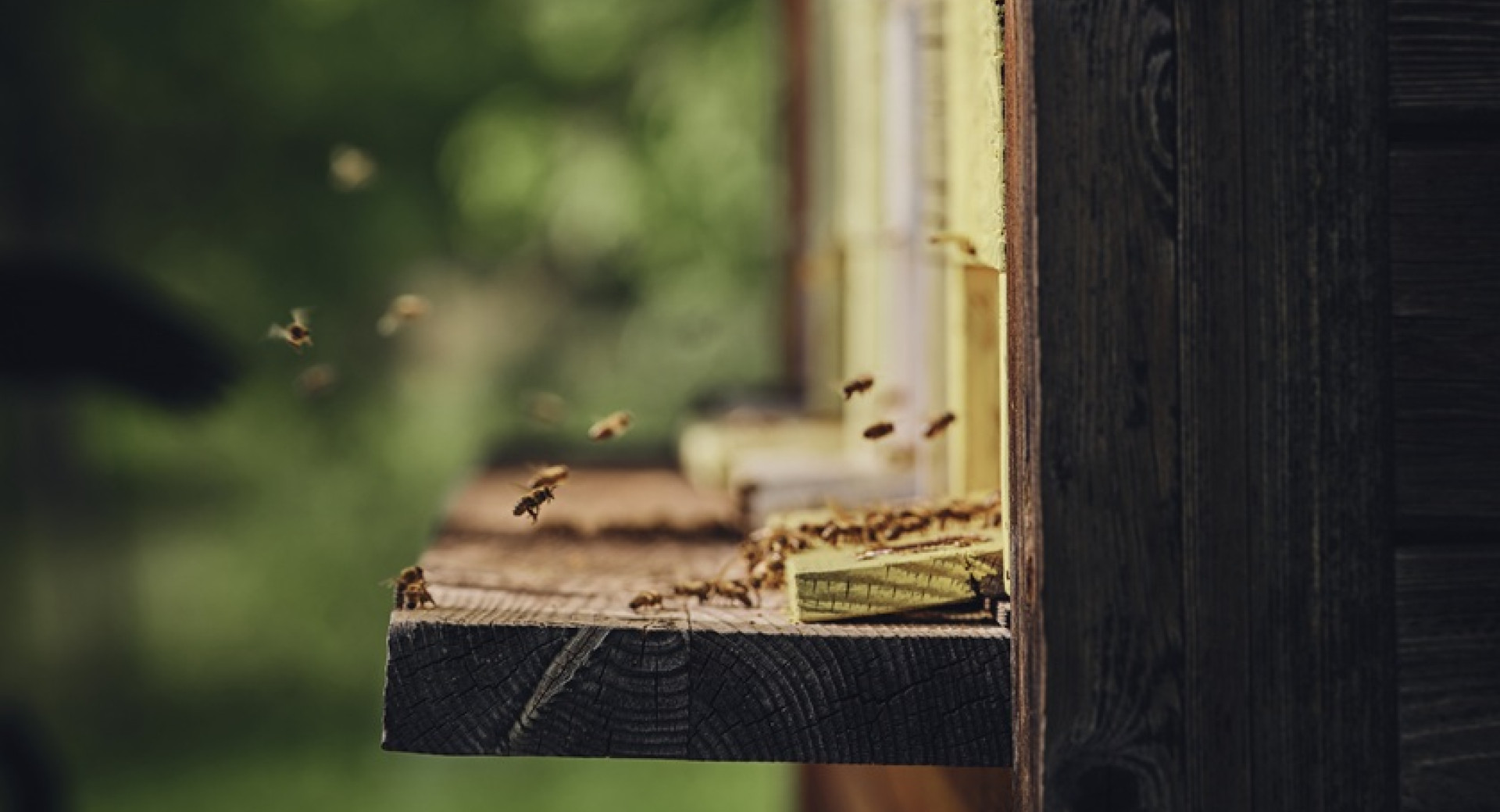
© Suzan Gabrijan
Let the story of the Carinolan bee and her honey take a turn toward empowerment, self-confidence, and national awakening. If we take a moment to pause and step back from urgent and pressing issues, we can see that Slovenians are achieving new milestones and successes on an almost daily basis, whether in sports, culture, cuisine, humanitarian work, scientific research, or in countless other fields. Even more than that, almost every one of us who strives, works, and navigates the challenges of everyday life relatively successfully deserves at least some recognition, if not a medal. Where then, in very general terms, does this deeply rooted modesty come from – this inability to recognize our own excellence and the wonderful stories that we write together as individuals and as a community?
The beginning of a wonderful bee story
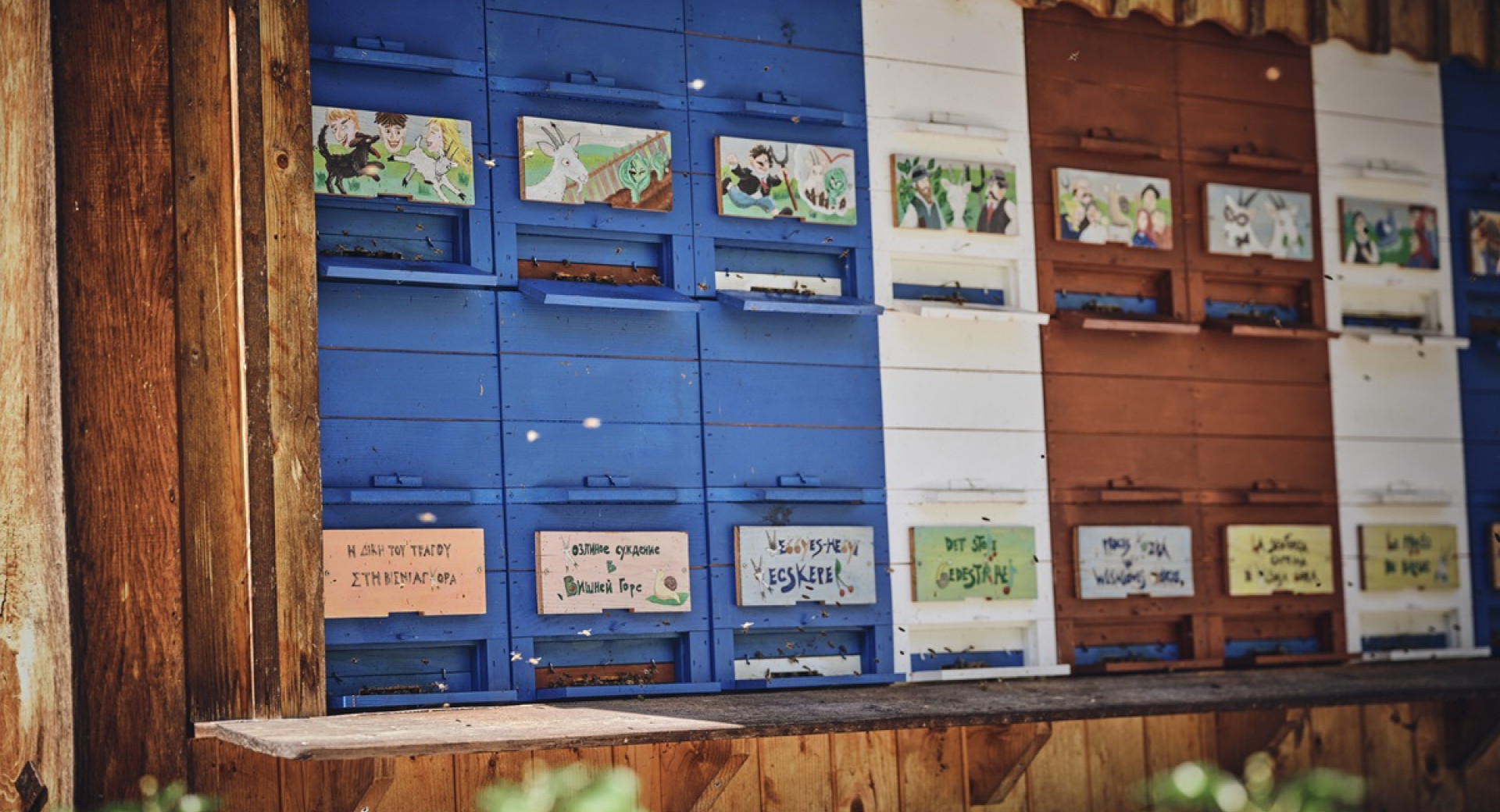
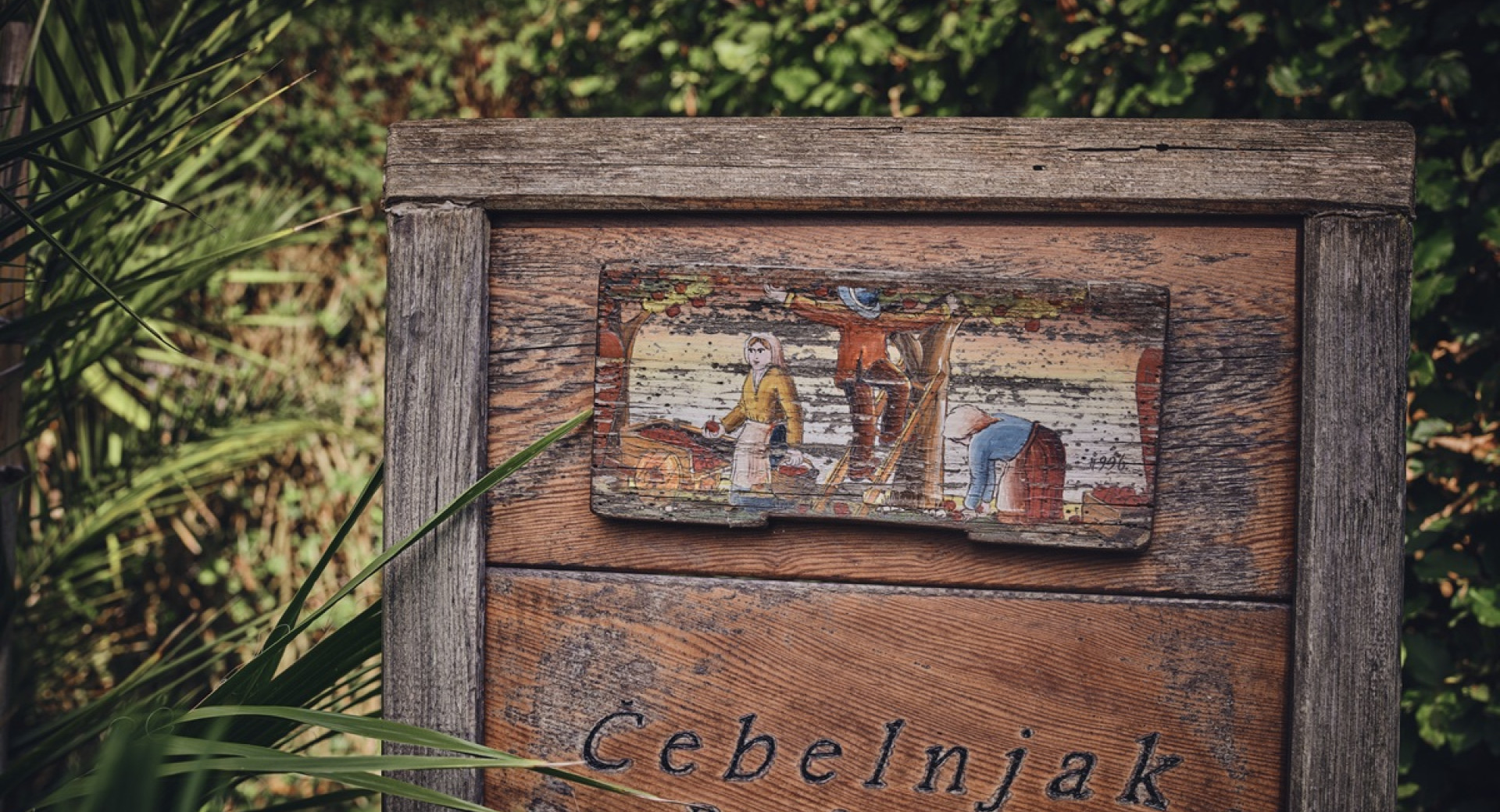
The Carniolan honey bee, also known as the Carniolan grey bee or Carniolan (Apis mellifera carnica), is one of the most widespread honey bee subspecies in the world. And thanks to a combination of exceptional knowledge and hard work, along with a stroke of luck, Slovenia has long been recognised as its homeland. The presence of Carniolan honey bees in our part of the world is attested to by historical writers such as Janez Vajkard Valvasor, Anton Scopoli, Peter Pavel Glavar, and Anton Janša. In 1770, Janša became the first imperial and royal instructor of apiculture in Vienna and shared his discoveries in books that are still used by beekeepers today. Among other things, he designed beehives as we know them today, advocated the importance of adequate bee pastures and, as a trained painter, painted numerous beehive panels with motifs from the Carniola region.
"Among all things created by God, there is none so diligent and useful to man, and so little in need of care or sustenance, as the bee." A. Janša
We have been celebrating World Bee Day on Anton Janša's birthday, 20 May, since 2018, when it was proclaimed so by the United Nations at the initiative of the Slovenian Beekeepers' Association.
The Rothchütz family also deserves great credit for raising awareness of the Carniolan honey bee, as they began trading Carniolan honey bees at Castle Podsmreka pri Višnji Gori in the mid-19th century. The quality of the bees, which Baron Rothchütz helped spread throughout Europe, was recognised by entomologist and beekeeper Dr. August Pollmann who, in 1879 in his book "The Value of Different Bee Breeds and Their Varieties, According to the Assessment of Renowned Beekeepers", gave the Carniolan bee its scientific name, Apis mellifica carnica.
But despite its widespread population, the Carniolan honey bee has been threatened for many years by foreign breeds brought to Slovenia by beekeepers from abroad. As early as 1920, the first calls were published in the Journal of the Department for the Protection of Nature and Natural Monuments at the Museum Society of Slovenia, stating that "from a natural history and national economic point of view, it is necessary to preserve the Carniolan honey bee subspecies". This was then written into law with the Livestock Farming Act, which in 2002 finally stipulated that "in order to protect the existence of the indigenous Carniolan honey bee in the territory of the Republic of Slovenia, the breeding and trade of breeding material of other bee subspecies is not permitted." Not only are bees protected, but also Slovenian beekeeping – since 2022, beekeeping in Slovenia has been included in UNESCO's list of intangible cultural heritage.
© Suzan Gabrijan

© Suzan Gabrijan

© Suzan Gabrijan
With their dedication, ingenuity, and tirelessness – all attributes of the Carniolan honey bee - the aforementioned men (and women – Antonija Rothchütz was also intensely involved in beekeeping) laid important foundations for the further development of beekeeping, its related activities, and the joy that comes with them. Numerous dedicated individuals began writing their own stories upon these foundations like a mosaic, or better yet, like honeycomb cells that are definitely worth discovering.
Not a snail, not a goat, but a bee
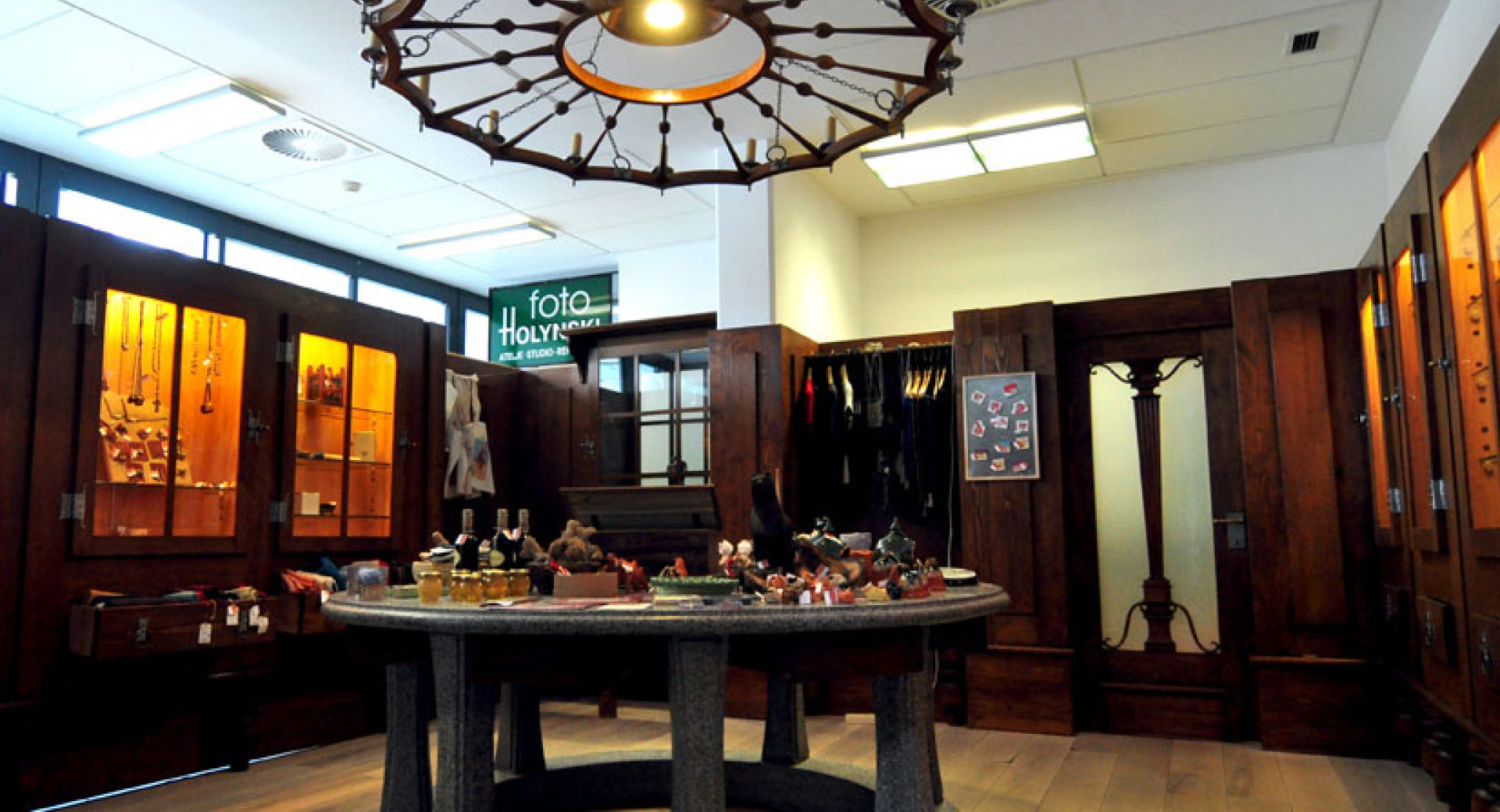
Since 2021, visitors in Višnja Gora can enjoy the Carniolan Bee House, which combines a museum, tourist information centre, shop, startup centre, hostel, and café all under the single roof of a former school building. The house lives and breathes with bees, from the paving stones in the parking lot, the outdoor apiary, the interactive exhibitions, and the tasting rooms with illuminated honey jars in all shades of gold, to the buzzing attic, where guests can socialize, and where those who decide to spend the night can do so in wooden rooms designed to look like honeycombs. The carefully designed space is a tribute to the dedication of the Rothchütz family, whose work is not well known to the general public. It takes visitors on an educational journey from colourful historical facts to the most modern presentation of the Carniolan honey bee, offering a glimpse into beehives with bee colonies inside and a presentation of Slovenian honey varieties.
"The notion that honey is a luxury food is entirely incorrect. History shows that it is one of the oldest and most nutritious foods in the world." A. Rothchütz-Ravenegg
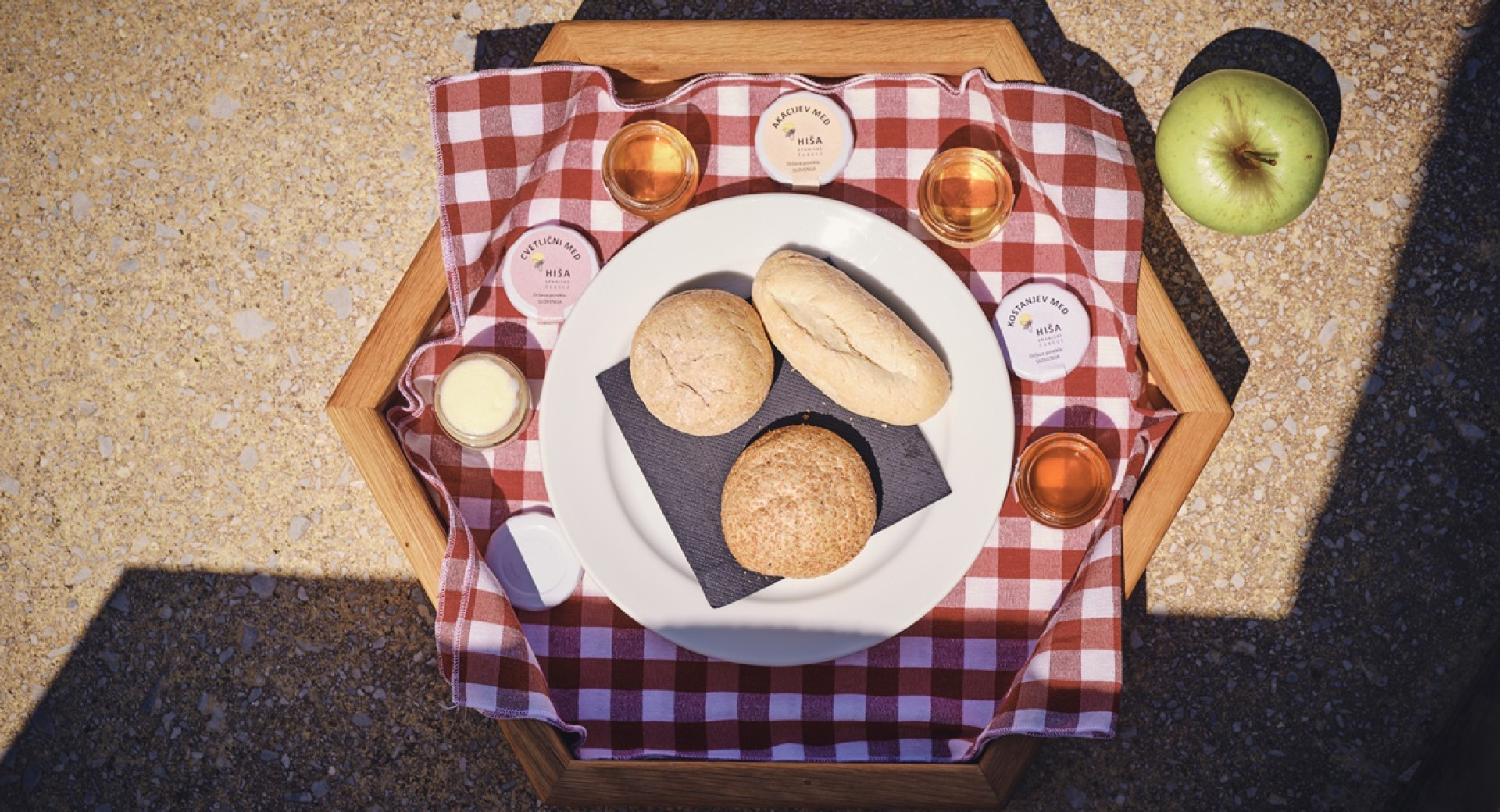
Antonija Rothchütz-Ravenegg, wife of Baron Rothchütz, was actively involved in the family beekeeping business and researched the uses and beneficial effects of bee products. In 1893, she published a book entitled "The Experienced Cook and Honey Cookery". The museum of the Carniolan Bee House features a room dedicated to her work, and there visitors can try various types of Slovenian honey. And since 2008, Slovenian beekeepers have been storing this honey in standardised jars, which informs buyers and guarantees to them that they are purchasing honey or bee products of Slovenian origin. “Slovenian honey” has been registered with the European Commission since 2013. Under this name, acacia, linden, chestnut, fir, spruce, floral or nectar, and forest or manna honey can be sold. Slovenian honey has a protected geographical indication, while Karst honey and Kočevje forest honey also have a protected geographical indication. All of these are available for tasting at the Carniolan Bee House.
© Suzan Gabrijan
© Suzan Gabrijan
A complete experience of visiting the Carniolan Bee House should be rounded off with the purchase of products from local producers, including cosmetics, jewellery, candles, books, honey products from the Novak Beekeeping Farm in Zgornja Slivnica (among which the honey spread with hazelnuts or pistachios is particularly popular), and honey liqueur from the Koželj Beekeeping Farm in Šmarje - Sap. The café also offers many honey-sweet treats, and not just in the form of Cafe Karolina's desserts. You can also enjoy coffee with honey, lemonade with honey and lavender, honey beer from the nearby Stežičar brewery, and honey sparkling wine from the Jere Beekeeping Farm.
If Ljubljana were Beeljana
With its honey wine and sparkling honey wine made from fermented honey, the Jere Beekeeping Farm is one of the honey product suppliers from the Central Slovenia region participating in the Ljubljana Bee Trail project, which was launched by the City of Ljubljana in 2016 as part of its European Green Capital programme. Since then, the project, which is based on a rich beekeeping tradition and represents the cultural and historical heritage of the city, has developed into a lively network of beekeepers, economic organisations, cultural institutions, and tireless individuals, who are constantly coming up with new ideas related to beekeeping, biodiversity, and food supply. As part of the Bee Trail, the Bee in Ljubljana programme was developed, and includes a sanctuary for bee swarms, the introduction of late-season mowing, the monitoring of wild pollinators, and an educational program called the Api-Kindergarten.
The beginnings of beekeeping in Ljubljana probably date back to the time of the first settlements, as evidenced by pieces of equipment found in the area. The importance of beehives is also reported in archival sources such as feudal registers from the Middle Ages. Medieval records also reveal that the village of Medno was once called Medovno, meaning "honey village," and was home to many beekeepers. They would then sell their products to honey merchants and candle makers in Ljubljana. Bees have always thrived in Ljubljana, and they have always been part of our everyday journeys. Take a moment to admire the Art Nouveau facade of Miklošičeva 4, the Municipal Savings Bank building at Čopova 3, or the entrance to the National Museum at Muzejska 1. Even Plečnik's house in Trnovo features a mysterious detail – a stone coat of arms with five bees.
Perhaps you will occasionally stroll down one of Ljubljana's shortest streets, Medarska near St. Nicholas Cathedral, where honey was sold from the late 19th century until 1901. Perhaps all you can hear there today is the buzzing of the city, but not far away, in good weather, you can hear bees collecting honey from strategically planted nectar plants and trees (e.g. planted in parks, rows of small ash trees along Slovenska cesta, wild gardens on the roofs of city transport stations) or returning home to one of the city's numerous beehives and apiaries.
During a walk through Tivoli Park, you can take a quiet moment to observe the lives of bees in the hives near the boathouse, which were designed with the help of students from the Faculty of Architecture. On the way to the castle, you can see Plečnik's apiary, a cultural monument that is a replica of the apiary from Lány Castle, near Prague. The apiary, designed in the form of a simple pavilion, was designed by architect Jože Plečnik in the 1930s as a residence for the first Czechoslovak president, Tomáš Masaryk. In the garden of Plečnik's house in Trnovo, there is also an apiary with five beehives designed by the architect himself, but it has unfortunately been empty since 1992. You can also safely observe the life cycle of Carniolan honey bees in the Botanical Garden, where an educational apiary has been set up for bees which, like the inhabitants of Ljubljana, like to spend time among the flower beds of our oldest cultural, scientific, and educational institution, which has been operating continuously since 1810. In the Botanical Garden, don’t miss the mighty Marmont's linden tree, which was planted when the botanical garden was established. A symbol of Slovenian identity for more than 200 years, it provides food for bees in summer and pleasant shade for all visitors.
© Suzan Gabrijan

© Suzan Gabrijan

© Suzan Gabrijan
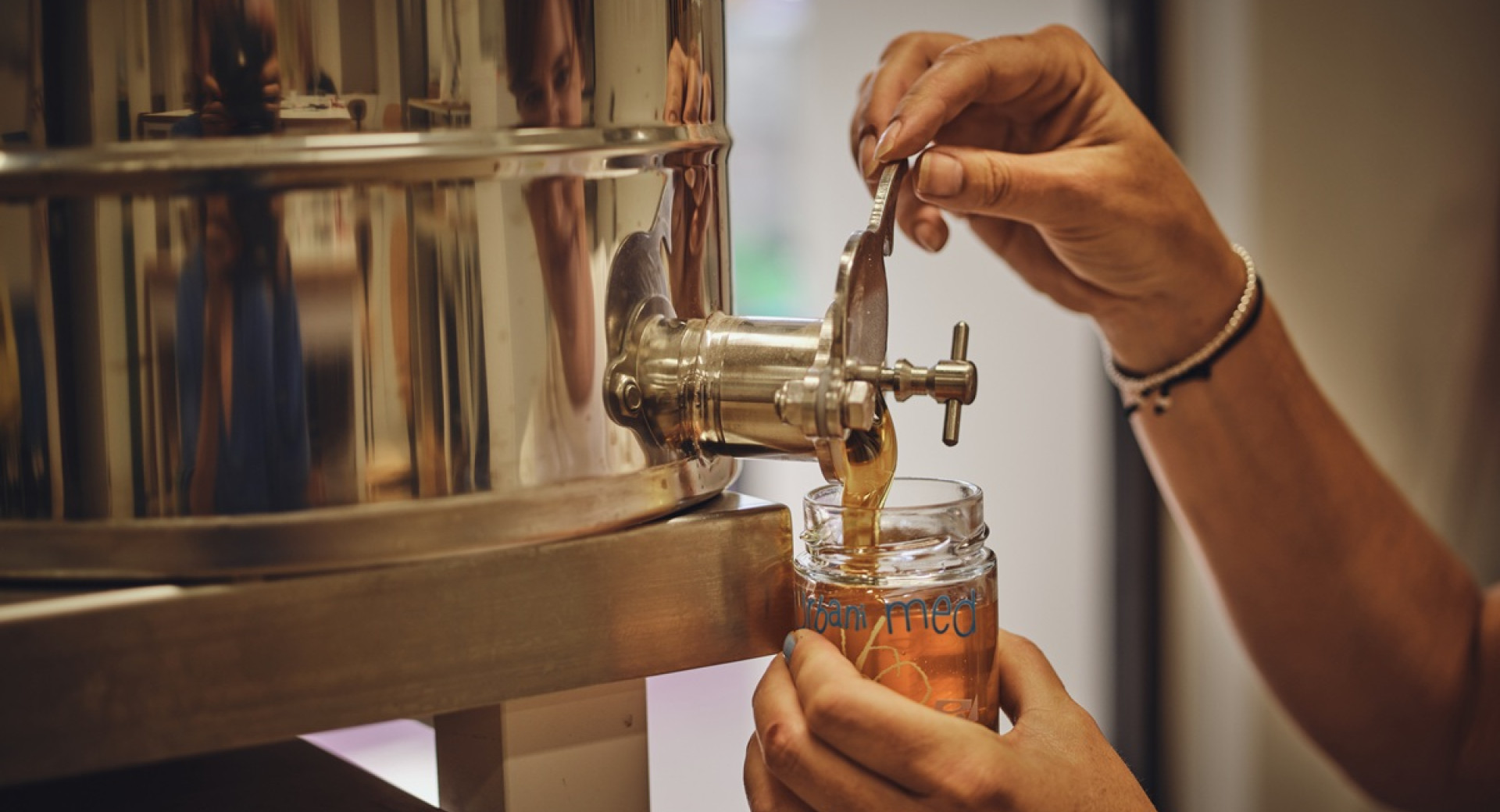
Ljubljana, which has been awarded the title of Most Bee-Friendly Municipality three times in recent years by the Slovenian Beekeepers' Association, thanks to its efforts in the field of beekeeping, brings together more than 350 beekeepers with a total of more than 4,500 beehives. While many are located on the edge of the basin, from where bees fly to graze in the Ljubljana Marshes or higher-lying meadows and forests, many more live in urban apiaries on city terraces and rooftops. According to Gorazd Trušnovec, one of Slovenia's most renowned urban beekeepers and president of the Urban Beekeepers' Association, these mini city beehives located within the ring road produce a wide variety of urban honey flavours. Bees from the city centre, which gather nectar from flowers on Golovec and Rožnik, mainly produce forest honey, those from Bežigrad are more accustomed to flowers from orchards and gardens, and bees from Šentvid are renowned for their excellent chestnut honey.
"Bees, even those accustomed to the hustle and bustle of the city, sense a beekeeper's discontent and impatience, so they must be treated with calm and respect." G. Trušnovec
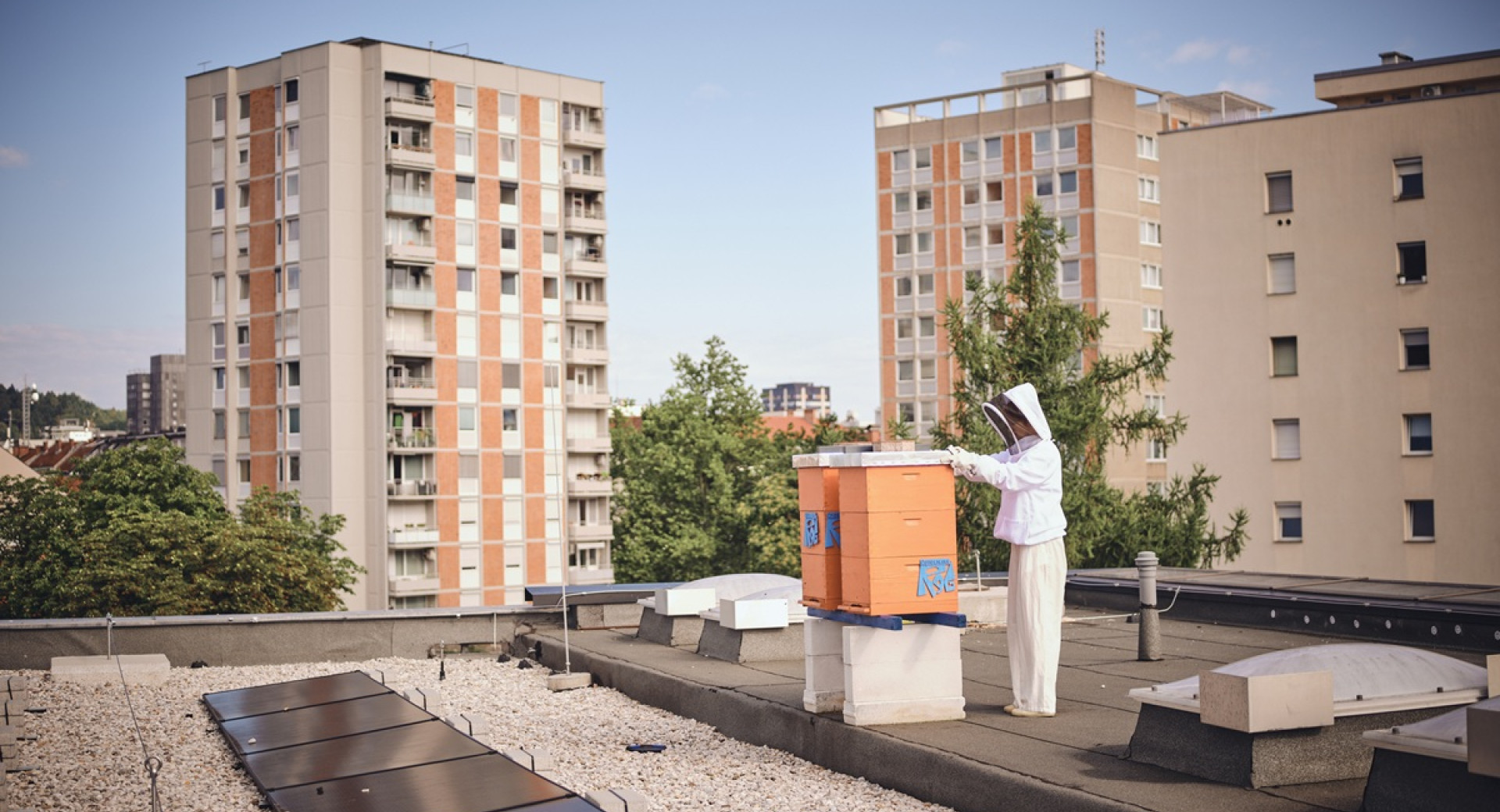
Franc Petrovčič is considered the pioneer of urban beekeeping in Ljubljana and in Slovenia in general, having set up the first beehives on the terrace of Cankarjev dom in 2011. Today, bees reside on numerous roofs in the BTC commerce district, on the terrace of Hotel Park, on the roofs of Kino Šiška, of the Španski borci Culture Centre, and of Center Rog, where the centre’s director Renata Zamida herself learned the art of beekeeping. Honey produced by urban bees is clean and high-quality due to the reduced use of pesticides and insecticides in cities, and substances present in exhaust fumes do not appear in honey. The quality of honey is also ensured by rich biodiversity which, through intensive efforts, Ljubljana improves year after year. And if you would like to try your hand at urban beekeeping, you can rent a beehive in Ljubljana and invite bees to your garden, balcony, roof, extension, or garage. Urban beekeepers will take care of them, and you can use the honey in your kitchen.
Indulge in sweet honey delights
Ljubljana and its surroundings offer a variety of opportunities to treat yourself to honey and other honey products. While traveling around the outskirts of Ljubljana, you may be delighted by a modest sign reading "Domači med" (homemade honey) near a farm, or you can purchase your own jar of sweet gold at one of the city's markets. In the shopping centre in Šiška, you can even buy honey straight from a honey vending machine. Or for a more boutique experience, choose one of the shops in the old city centre.
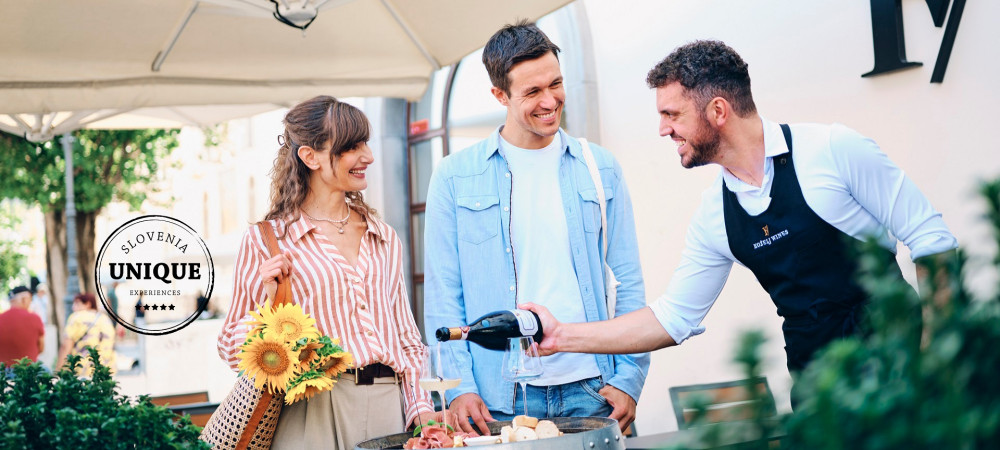
You can also try different types of Slovenian honey as part of the Yummy Market Walk experience organised by Ljubljana Tourism. A sampling of delicacies from the central market and surrounding restaurants will lead you to the nearby Učilna okusov (Flavour Classroom) and its collection of bee products. You may also be able to try authentic Ljubljana honey – an informal standard used by beekeepers participating in the Bee Trail, who produce chestnut, floral, or forest honey and are included in the SMGO system (Slovenian honey with geographical indication). You can also try honey products at Teahouse Primula in the Botanical Garden, where honey delicacies are prepared by pupils and students from the nearby Biotechnical Education Centre Ljubljana.
Pollen and honey are also popular ingredients used by Ljubljana's culinary masters. Restaurant Grič serves buttered bread with honey and chives as an appetizer, followed by butter with black garlic and honey, while TaBar adds pollen to dry-aged trout and serves it on bread filled with boiled cream and an orange wine reduction. The B-restaurant and bar (InterContinental) offers honey cocktails and ice cream with a view, while Gostilna na Gradu serves gingerbread with elderflower ice cream. On the other side of the castle courtyard, local honey and pollen occasionally appear in the attractive dishes by Igor Jagodic of Restaurant Strelec, while the most famous proponent of the use of bee products in haute cuisine is undoubtedly the godfather of Slovenian haute cuisine, Janez Bratovž of Restaurant JB.
"I really love using pollen. And Gorazd Trušnovec has something very special for me, called "izkopanec" or bee bread. It is pollen brought to the hive, which the bees process, remove the water from, and add their own secretions, so that it ferments and becomes even more nutritious." – J. Bratovž
You can also enjoy a special honey experience at the Slovenian Ethnological Museum where, accompanied by mead, gingerbread, and buckwheat bread with honey, you will be taken through the story of the Lectarija shop, which was designed and furnished in the late 1930s by Jože Plečnik at the request of beekeeper and candlemaker Jakob Krbavčič and his wife Henrieta. And, as part of a permanent exhibition called Between Nature and Culture, you will learn more about beekeeping and about the tradition of "lectarstvo" (the production of semi-permanent figurative and decorated pastries made from honey dough), and see an exceptional collection of painted beehive panels.
© Suzan Gabrijan
We desperately need bees. Not only do they provide a significant portion of our daily diet, they inspire us to be dedicated, hardworking, adaptable, and resourceful, and to use those qualities to include bees in our lives in new and innovative ways. Above all, they teach us time and again that true strength comes from community; from joint efforts and endeavors. And such unity and strength should not be taken lightly; it should be a source of pride.
-
Yummy Market Walk
The tastiest way to experience Ljubljana’s Central Market.